
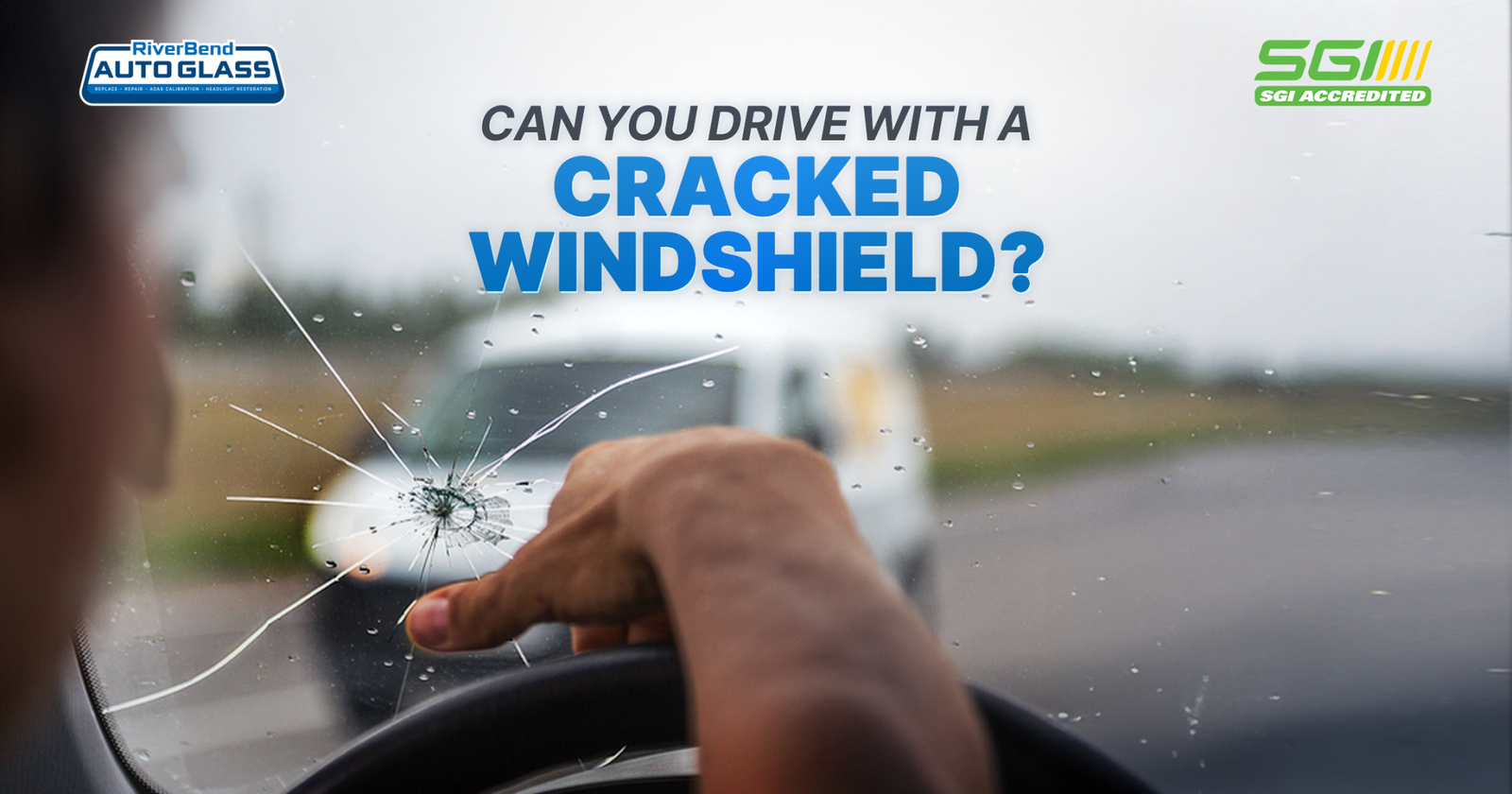
A small chip or crack in your windshield may seem harmless. But it can quickly become a serious safety and legal issue. Data from Google shows that most small cracks start from tiny chips. Temperature changes and road bumps make them worse. This hurts your visibility and the glass strength.
Driving with a cracked windshield isn’t always illegal. But if it blocks your view or weakens the glass, it becomes unsafe. Experts say a crack longer than a dollar bill or in the driver’s line of sight fails most state legal requirements. Knowing when to repair it keeps you safe and helps you follow the law.
Can You Drive With a Cracked Windshield? This guide covers windshield damage, safety risks, and when you can wait versus when you should not.
Is It Legal to Drive With a Cracked Windshield?
The answer depends on where you live and how bad the damage is. If a crack blocks your view or weakens the glass, it is usually illegal and unsafe.
General Legal Rules
The main rule is simple. Your windshield must not block your clear view of the road. Most laws focus on safety and visibility, not on every tiny crack.
Laws vary by state and country. Some places set exact size limits for cracks. Others use general visibility rules. In Michigan, a cracked windshield alone may not justify a traffic stop unless it creates a bigger safety issue. In other places, officers may stop you right away if the damage seems to block your view.
Visibility is the key factor. If the crack does not block your view of the road, other cars, or people walking, it is less likely to be illegal. But if it sits directly in front of you or creates glare, it becomes unsafe and a legal problem.
When It Becomes Illegal
A crack or chip becomes a legal risk in three main situations.
First, if a crack lies directly in your line of sight. This area is often called “Zone A” — a narrow strip about 290 mm wide in front of the steering wheel. Even a small mark here can be illegal because it blocks your vision.
Second, if the damage affects windshield integrity. A windshield gives a car up to 30% of its structural strength. It also helps airbags deploy correctly. Cracks that weaken the glass, especially edge-to-edge damage, often need a full replacement.
Third, if there are sharp edges or risk of shattering. A cracked windshield can develop sharp edges. It is more likely to fail under stress. Heat, cold, or another bump can make cracks spread. This puts you and your passengers at risk. That is why police often give defect notices for this reason.
Examples by Region
Rules are different around the world.
USA: Laws vary by state. Kansas bans driving with damage that blocks your view. Michigan only allows a cracked windshield citation if you are stopped for another reason first. New York and Texas use inspection rules for cracks in the driver’s line of sight.
Canada: Visibility rules are strict. In Quebec, drivers must clear snow, ice, or anything that reduces visibility. Police can fine you $100 to $200. In Nunavut, local rules require you to clear all windows and mirrors. Fines can reach about $250.
UK/Australia: Both follow roadworthiness standards. In the UK, a car fails its MOT inspection if a crack is larger than 10 mm in the driver’s line of sight or bigger than 40 mm in the wiper area. In Australia, states issue defect notices for any windscreen damage. Victoria and NSW have strict limits on cracks in the driver’s view.
Is It Safe to Drive With a Cracked Windshield?
Driving with a cracked windshield is risky. It reduces your vision. It weakens your car’s strength. And it can shatter without warning. This puts you and your passengers in danger. It also stops airbags from working right.
Reduced Visibility
The biggest danger is clear. You cannot see the road well. But a crack affects your vision in more ways than you think.
Glare from sunlight or headlights is a real problem. A crack scatters light instead of letting it pass through. Sunlight at low angles can create intense glare. Oncoming headlights do the same. This glare can blind you for a moment. You may not see people walking or bikes near you. Your reaction time gets slower.
A crack also distorts your view of the road. It bends light and warps what you see. This makes it hard to judge distance and speed. You may misjudge where other cars are. Signs or bumps in the road look closer or farther than they are. This problem gets worse in rain, glare, or bad weather.
Structural Weakness
Most drivers do not know this. Your windshield helps hold your car together. In a modern car, it supports the roof. It also helps airbags work the right way.
In a rollover crash, the windshield supports the roof. It gives 30 to 45 percent of the roof’s strength. A cracked windshield may fail. That means less support. The roof can collapse. A crash that should be survivable can turn deadly.
The windshield is also important for airbag deployment. Your passenger airbag uses the windshield as a backstop. If the glass is weak or cracked, it may shift or break when the airbag opens. Then the airbag may not inflate the right way. You and your passengers have less protection in a crash.
Risk of Sudden Shattering
A cracked windshield is not predictable. It can be stable for weeks. Then suddenly crack across the whole glass. No warning. You are driving at highway speed. Now you cannot see anything.
Temperature changes make this worse. Glass expands when hot. It shrinks when cold. Fast changes create stress. Blasting cold AC on a hot windshield is one example. Using hot defrost on a freezing glass is another. That stress makes small chips spread into big cracks.
Road vibrations also cause problems. Bumps, potholes, and rough roads flex the glass. Every bump stresses the weak area. The crack gets longer. At highway speeds, a small defect becomes a large, dangerous break fast. Your vision gets worse. The risk of sudden failure goes up.
Types of Windshield Cracks
Common windshield damage falls into two groups. Chips and cracks. Chips are small pits from impacts. Cracks are longer breaks. Typical crack types include bullseye, star break, half‑moon, edge crack, stress crack, floater crack, and combination damage. Each type has different repair options. Each also has different urgency.
Chip vs Crack
The first and most important difference is between a chip and a crack. Both are damage. But they have different traits, fix options, and safety risks.
Small chips are tiny pits or dents. A rock or debris causes them. They are usually smaller than about 1 inch (25 mm) across. They don’t have long cracks coming from them. Chips this size can often be fixed. A technician injects resin to fill the hole. This helps stop the damage from spreading. But if the chip sits in the driver’s view, has spread, or has dirt or moisture inside, you may need a full replacement.
Long cracks are different. They are straight breaks that go beyond a small chip. Unlike chips, long cracks usually cannot be fixed once they exceed about 6 inches (15 cm). This is especially true if the crack is near the windshield edge or in the driver’s view. In these cases, a full windshield replacement is needed.
Common Crack Types
Auto glass experts recognize several crack patterns. Each has its own cause and repair needs.
Bullseye crack: This looks like a circle or target. It has a dark center. A direct impact, like a flying stone, causes it. The impact leaves a cone‑shaped chip in the outer glass layer. If the bullseye is small (often under 1 inch) and has not cracked through the inner layer, it can usually be repaired. But if it sits in the driver’s view, or is larger and deeper, you may need a full replacement.
Star break: This has a central impact point. Multiple cracks spread outward like a star or spider web. Small star breaks with fewer than three short legs (each under 1 inch) may be fixable. But long‑legged breaks or breaks near the edge usually need full windshield replacement.
Edge crack: This starts within 1 inch of the windshield’s edge. That is the glass’s weakest point. Causes include poor installation, manufacturing flaws, or the car body flexing. An edge crack looks like a single line with no impact mark. It cannot be repaired. It also weakens the bond between the glass and the car frame. This type always needs a full replacement for safety.
Stress crack: This is a single, straight or slightly curved line. There is no impact point. Causes include heat stress, glass flaws, or bad installation. Stress cracks usually start at the edge. They cannot be repaired. The glass is under tension and may shatter without warning. A full replacement is required.
When Should You Repair vs Replace?
Deciding to repair or replace a windshield depends on damage type, size, location, and depth. Repairs are quicker and cheaper ($50–$150) but only suitable for small chips or minor cracks. Large, edge‑located, or structural cracks require full replacement ($200–$1,000+), ensuring safety and compliance with insurance guidelines.
Repairable Damage
Repairable windshield damage includes small chips or short cracks. A technician can inject resin into the void. This restores strength and stops the crack from spreading. It also improves clarity. But not every type of damage can be fixed.
Small chips (usually under a certain size): Repairable damage includes small chips or bullseye breaks under about 1 inch (25 mm). It also includes short‑legged star breaks with legs shorter than 1 inch and three or fewer legs. The damage must not have gone through the inner PVB layer. Larger or deeper damage may still be repairable. It depends on the technician’s skill and tools.
Not in driver’s direct line of sight: Even small chips in the driver’s direct line of sight usually need a full windshield replacement. This area is called “Zone A.” It is about 7 to 8 inches wide. Repairs can leave tiny distortions. Those distortions reduce visibility. They also cause eye strain. This is a safety risk, especially at night or in low light.
When Replacement Is Needed
Full windshield replacement is required when the damage is too large, too deep, or in a critical area. A repair may fail. That failure can put you at risk during normal driving or a crash.
Large cracks: A windshield crack longer than about 6 inches (15 cm) is generally too big to fix safely. Resin cannot reliably fill and strengthen a crack that long. A full windshield replacement is the recommended way to restore the glass strength and keep you safe.
Multiple cracks: If your windshield has multiple cracks or chips, replacement is usually the best choice. This is true even if each single piece of damage is small. More than two separate damage points weaken the glass. Repairs become less reliable. Multiple repairs can also interfere with the glass structure and your safety.
Crack near the edge: Any crack near the edge requires immediate windshield replacement. “Near the edge” means within about 2 inches (50 mm). This type of crack weakens the bond between the glass and the car frame. In a crash, the glass could pop out. Normal driving also makes the car body flex. That flex makes edge cracks grow fast. This creates serious safety hazards.
Risks of Ignoring a Cracked Windshield
Ignoring a cracked windshield may seem harmless at first. But it can quickly turn into a series of legal, safety, and money problems.
Driving with visible windshield damage can lead to fines or tickets. Police may stop you if the crack looks unsafe or blocks your view. Also, cars with large cracks often fail state safety inspections. That means you cannot legally drive the car until you fix it.
Beyond legal issues, a damaged windshield raises your risk of a crash. It impairs your ability to see the road. It also weakens your car’s strength in a collision. Over time, a small cheap repair becomes a costly full windshield replacement. Cracks grow larger and more complex the longer you wait.
Tips to Prevent Crack Spreading
Once a chip or crack appears, act fast. Avoid extreme heat or cold. Stay off rough roads. Don’t slam doors. These steps slow down the spread until a pro can fix it. This saves you money and keeps you safe.
Avoid extreme temperature changes: Glass expands when heated. It contracts when cooled. Fast shifts create stress. For example, pouring hot water on a frozen windshield. Or blasting cold AC on a hot one. That stress makes cracks spread. Park in the shade. Warm up your car slowly. This reduces stress on the glass.
Drive carefully on rough roads: Potholes and bumps make windshield damage worse. Slow down. Avoid uneven surfaces. Take smoother routes when you can. Lower speeds also mean less wind pressure. That helps stop the crack from growing until you get it repaired.
Don’t slam doors: Slamming a car door creates a sudden burst of air pressure inside the car. That pressure pushes against the windshield. If the glass is already cracked, this can force the crack to spread fast. Always close doors gently. This reduces stress on damaged glass.
Get it fixed early: The best way to stop a crack from spreading is to fix it right away. Small chips can grow fast. Heat, vibration, and moisture all make it worse. A small chip can quickly become too big to repair. Early fixes are faster and cheaper. They also restore the glass strength. Waiting usually leads to a costly full windshield replacement.
Cost of Repair vs Replacement
Windshield costs vary by damage and vehicle. Repairs are usually quick and inexpensive, while replacement is costlier but necessary for serious damage. Insurance often covers repairs, helping reduce overall expenses.
- Average repair cost: Average repair cost: Windshield repair typically costs $50–$150, depending on damage type and number of chips. Simple chips are cheaper, while complex cracks cost more. Many shops charge $75–$125 for the first repair and less for additional ones. Repairs take 30–60 minutes, may include a warranty, and are usually the most cost-effective option.
- Average replacement cost: Average replacement cost: Windshield replacement typically ranges from $200 to $1,000+, depending on vehicle type and features. Standard cars cost less, while luxury or ADAS-equipped vehicles can exceed $1,000. ADAS recalibration alone can add $150–$500+, increasing total cost and time.
- Insurance coverage options: Insurance coverage: Windshield damage is usually covered under comprehensive insurance, with drivers paying a deductible ($100–$500). Many regions waive deductibles for repairs, and some offer zero-deductible glass coverage. Replacement may still require an excess. Policies vary widely, so checking your coverage helps you minimize costs and act quickly when damage occurs.
Final Verdict: Should You Drive With It?
The short answer is no. You should only drive with a cracked windshield for a very short time. And only if the damage is minor. It must not block your view. But even then, it is not truly “safe.”
Small chips or tiny cracks might let you reach a repair shop. That is the only time driving is okay. Any damage that hurts your visibility or weakens the glass is risky. It may also break local laws.
Experts agree on this. Windshield cracks weaken your car’s safety. They also grow without warning. The strong recommendation is simple. Get the crack repaired or replaced as soon as you can. Do not keep driving on it.
Don’t wait until a small chip becomes a big problem. Contact Riverbend Autoglass today for fast, affordable windshield repair or replacement. Stay safe on the road.