A small chip or crack in your windshield might seem minor, but ignoring it is a risk to your safety and vehicle structure. Tiny damage can quickly grow into long cracks that weaken the glass and lead to costly replacements. When it’s time to fix the damage, many drivers wonder whether to choose a certified repair service or a cheaper, non‑certified option.
Certification isn’t just a label—certified techs follow industry‑recognized standards and safety procedures, which can affect repair quality, durability, and safety outcomes. This guide helps you cut through the confusion and decide what truly matters when repairing your windshield.
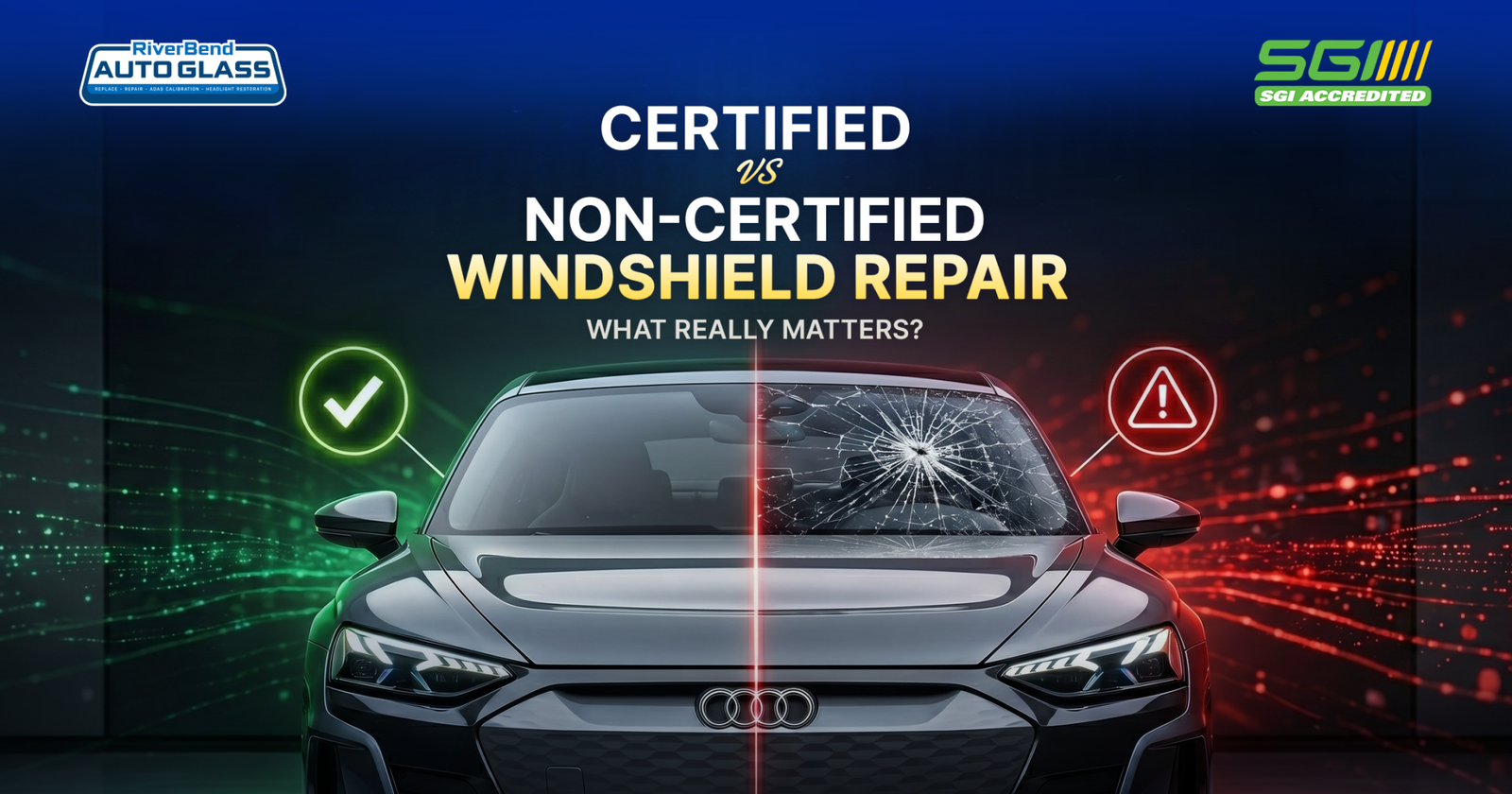
In this guide we explain step by step to Certified vs Non-Certified Windshield Repair: What Really Matters?
What Is Certified Windshield Repair?
Certified windshield technicians are formally trained, follow safety standards, and ensure proper repair—offering quality, accountability, and reliability that non-certified providers may lack.
Definition of certified repair technicians: A certified windshield technician completes accredited training, passes exams, and follows industry repair standards. They understand glass physics, repair chemistry, and vehicle safety, staying updated on technologies. Non-certified technicians may lack formal education, using experience or outdated methods that risk incomplete or unsafe repairs.
Overview of certification bodies (e.g., Auto Glass Safety Council): The Auto Glass Safety Council (AGSC) sets respected technician repair and replacement standards and conducts certification testing for proper procedures and safety compliance. Its National Windshield Repair Division (NWRD) focuses on windshield repair credentials. Other organizations like the National Glass Association (NGA) offer industry education and credentials. Ask shops which recognized certification they hold.
What certification typically includes:
- Proper training: Certified technicians undergo structured training combining classroom and hands-on practice. They learn to assess damage types, glass fracture physics, repair resin chemistry, and vehicle-specific features like HUD or UV coatings. Non-certified technicians often rely on limited experience, risking incomplete or unsafe repairs.
- Industry-standard repair techniques: Certified technicians follow proven repair protocols: cleaning, moisture removal, resin injection, pressure cycling, and UV curing. They ensure correct procedures, avoid air bubbles, and achieve clear, durable repairs. Non-certified technicians may skip steps or use improper tools, risking weak, visible, or incomplete repairs.
- Safety compliance: Certified technicians prioritize safety, understanding windshields’ structural role, airbag function, and ADAS integration. They follow proper handling, legal, and OSHA protocols, advising replacement when needed. Non-certified technicians may overlook risks, creating hidden hazards, whereas certification ensures repairs meet industry safety standards.
What Is Non-Certified Windshield Repair?
Explanation of non-certified service: Non-certified windshield repair is done by technicians without accredited training or exams. They may have experience or self-taught skills, often offering lower prices, but quality and safety vary widely, with no guarantee of standardized procedures, proper curing, or long-lasting, reliable repairs.
Common characteristics:
- Lower cost: The main appeal of non-certified repair is lower cost—often 20–50% cheaper than certified services, with prices around $50–$80 versus $100–$150. While tempting for budget-conscious drivers, cheaper repairs can fail, causing cracks to spread and requiring full windshield replacement. In the long run, saving upfront may cost far more, making these “bargains” potentially false economies.
- Lack of formal training: Non-certified technicians often learn through apprenticeships, videos, or trial and error. They may know basic resin injection but lack formal training in glass physics, resin chemistry, moisture removal, and safety. This can lead to skipped steps, improper tools, or unsafe repairs that compromise durability and windshield integrity.
- Inconsistent quality: Without third‑party verification, non‑certified repair quality varies widely—some technicians do great work, others do poor or weak fixes, and there’s no reliable way to know beforehand. This inconsistency is the biggest risk of choosing non‑certified repair.
Key Differences Between Certified vs Non-Certified Windshield Repair
Choosing between certified and non-certified repair affects quality, safety, durability, and value. Certified technicians follow standards, use better materials, and offer warranties, while non-certified services may cut corners, risking inconsistent results and limited protection.
a. Quality of Work
- Certified: Certified technicians follow documented standards and repair protocols, which helps deliver more consistent, high-quality results. AGSC’s repair standard is designed around procedures, education, and product performance, with consistent practices across the industry.
- Non-certified: Non-certified repairs vary widely in quality. Skilled technicians may deliver strong, clear results, but inexperienced ones can leave bubbles, poor curing, or visible flaws. These issues may cause the repair to fail quickly, allowing cracks to spread. The biggest risk is inconsistency—you won’t know the outcome until the job is done.
b. Safety Standards
- Certified repairs follow strict safety protocols: Certified repairs follow strict safety standards. Technicians recognize windshields as structural components, supporting up to 45% of roof strength and aiding airbag function. They assess repairability, recommend replacement when needed, and handle materials safely. With proper training and insurance, they ensure the windshield’s integrity is preserved—not compromised.
- Non-certified may overlook structural integrity: Non-certified technicians may overlook structural integrity. They might repair unsafe damage, like edge cracks, creating hidden risks. In a crash, the windshield may fail to support the roof or airbags properly. Limited training and lack of insurance can leave you exposed—making cheaper repairs a potential safety gamble.
c. Materials & Tools Used
- Certified: Certified technicians use OEM-grade resins matching factory glass for strength and clarity. These resist UV yellowing and form durable bonds. With advanced tools—pressure injectors, vacuum systems, and UV curing lamps—they ensure precise, long-lasting repairs. Though costlier, these materials deliver superior, reliable results.
- Non-certified: Non-certified repairs often use low-grade resins and basic tools, which may yellow, shrink, or fail to bond. Some technicians use inappropriate adhesives like epoxy or super glue, risking damage and weakness. While cheaper upfront, these materials increase the chance of failed, discolored, or short-lived repairs.
d. Warranty & Guarantees
- Certified services often provide warranties: Certified repair shops usually offer warranties, from one year to lifetime. If a repair fails—cracks spread, resin discolors, or visibility issues arise—they will fix it at no cost. Some warranties are transferable, boosting resale value, reflecting the shop’s confidence in their certified technicians and materials.
- Non-certified rarely offer long-term guarantees: Non-certified repairs rarely come with long-term warranties. Most offer no written guarantee or only a short one, often under 30 days. Verbal promises may go unhonored, leaving you to cover repeat repairs or full replacement. The low upfront cost can lead to higher expenses over time.
Why Certification Matters for Your Safety
Certification matters because windshields are safety-critical. Proper repairs ensure structural support, correct airbag deployment, and occupant protection. Poor, non-certified repairs risk failure, reduced visibility, and increased danger in crashes.
Role of windshield in vehicle structure: A windshield provides 30–45% of a vehicle’s structural strength, supporting the roof in rollovers. Improper repairs or non-certified work can fail under stress, risking shattering or ejection. Certified technicians know which damage is safe to repair and when replacement is necessary to preserve structural integrity.
Importance during accidents and airbag deployment: The windshield supports passenger-side airbag deployment, directing force safely. Cracked or poorly repaired glass can shatter or shift, causing airbag malfunction and increasing injury risk. Certified technicians ensure repairs maintain this critical function, while non-certified work may compromise airbag performance and passenger safety.
Risks of poor repair:
- Reduced visibility: Poorly repaired windshields can distort vision, causing glare, distractions, and fatigue—especially at night. Failed repairs may let cracks reappear in your line of sight. Certified technicians ensure optically clear, nearly invisible repairs, while non-certified work often produces visible defects that compromise safety and visibility.
- Increased chance of shattering: Proper repairs restore windshield strength, preventing cracks from spreading and reducing shattering risk. Poor repairs can trap air or moisture, fail to bond, and create hidden weaknesses, increasing danger in collisions. Certified technicians ensure structural integrity, while non-certified work may fail when it matters most, putting occupants at risk.
Cost Comparison: Is Certified Repair Worth It?
Certified repairs cost more upfront but offer durability, warranties, and reliability. Cheap non-certified repairs may fail, leading to repeat work, full replacement, or accident costs, making certification a smarter long-term investment.
- Short-term vs long-term cost analysis: While certified repairs cost more upfront—around $120 versus $60 for non-certified—the long-term value is clear. Cheap repairs can fail, letting cracks spread and forcing a second repair or a $500+ replacement. Over five years, certified work averages $24 per year, compared to $112 per year for failed non-certified repairs, making certification far more cost-effective and reliable in the long run.
- Hidden costs of cheap repairs: The upfront cost of a non‑certified repair (e.g., ~$60) is only part of the story. If it fails, you may pay again or face a full windshield replacement costing $250–$1,000+ when cracks spread beyond repairable limits. Hidden costs like repeat repairs, replacement fees, inspection failures, insurance impacts, and lost time can far outweigh initial savings, making certified repairs a better long‑term value.
- Value of warranty and peace of mind: Certified repairs come with written warranties—often 1 year to lifetime—ensuring failed repairs are redone at no cost. Some are transferable, boosting resale value. This guarantees professional-grade work and peace of mind, letting you drive confidently. Non-certified repairs rarely offer enforceable warranties, reflecting lower accountability despite a lower upfront price.
When Non-Certified Repair Might Be Acceptable
Non-certified repair may be acceptable for minor chips, temporary fixes, or tight budgets. The key is understanding the risks, knowing when it’s reasonable, and avoiding situations that compromise safety or structural integrity.
- Minor chips in non-critical areas: Non-certified repair can be acceptable for tiny chips (≤10 mm) in non-critical areas—far passenger side, top corners, or bottom edge—where minor imperfections won’t affect safety. For older vehicles with low resale value, it’s a cost-saving option, but inspect carefully for distortion, bubbles, or visible marks.
- Temporary or emergency fixes: In emergencies—long trips, weekends, or delayed insurance approval—a non-certified or DIY repair can temporarily stabilize a chip and prevent spreading. Treat it as a short-term solution and have a certified technician inspect or redo it within weeks. Clear tape may protect the chip without complicating future repairs.
- Budget constraints (with caution): If budget limits make certified repair unaffordable, a non-certified option ($50–80) may be a temporary solution—but proceed cautiously. Research the technician, verify materials and any warranty, and inspect the repair for distortion. Monitor closely; if cracks spread, stop driving and save for certified repair. Safety should never be compromised.
How to Choose the Right Repair Service
To choose the right repair service, verify certifications, ask specific questions, check reviews, and confirm credentials. Doing so protects safety and prevents costly, low-quality repairs.
Questions to ask:
- Are technicians certified? Ask more than “Are you certified?” Verify the certifying body—reputable ones include AGSC or NGA. Confirm it’s current, as certifications require renewal and ongoing education. “Factory certified” alone isn’t enough. Always request proof—certificates, technician names, or certification numbers—to ensure skills and compliance with modern techniques and vehicle technologies.
- What warranty is offered? Ask for a written warranty detailing duration, coverage (crack spread, resin discoloration, visibility), and transferability. Verbal promises offer no protection if the shop changes ownership or refuses service. Certified shops usually provide warranties, while non-certified shops rarely do or have restrictive terms—verify carefully before repair.
- What materials are used? Ask about the materials and tools used. Professional-grade resins (e.g., Novus, Delta, GlasWeld) match factory glass, resist yellowing, and cure clear. Ensure the technician uses proper injection systems with vacuum and pressure control; manual syringes or generic kits indicate lower-quality, less reliable repairs.
Check reviews and reputation: Check online reviews on Google, Yelp, and BBB for patterns of issues or complaints. Ask for customer references and verify certifications with organizations like AGSC. Accredited shops with strong ratings and responsive service indicate reliability, while unverified claims or repeated complaints are red flags.
Look for certification proof: Always verify certification—request physical or digital proof showing the technician’s name, certifying organization, and dates. Check AGSC online if applicable. Look for plaques, logos, or printed materials. Shops that cannot provide proof are likely not certified, so take the time to confirm for your safety.
Red Flags to Avoid
Recognize red flags when choosing a windshield repair service: extremely low prices, no warranty, lack of transparency, and poor reviews. Avoid these signs to ensure safety and quality.
-
- Extremely low pricing: Extremely low prices ($20–30) usually signal compromised quality—cheap resin, inadequate tools, skipped steps, or uninsured technicians. Such repairs often fail, leading to repeat work or full replacement. Certified repairs ($100–150) cost more upfront but ensure proper materials, tools, training, and warranty, saving money and risk long-term.
- No warranty: A shop without a written warranty—or only a verbal promise—signals low confidence. Certified repairs include warranties covering failure, crack spread, or resin discoloration. Without it, you risk paying again or for full replacement. Always request a written warranty; if unavailable, walk away.
- Lack of transparency: Lack of transparency is a major red flag. Evasive answers about certification, resin brand, tools, or training indicate hidden shortcomings. Professional shops welcome questions, show proof, explain processes, and provide written warranties. If a technician reacts defensively, walk away—your safety depends on honesty and clarity.
- Poor customer reviews: Check online reviews on Google, Yelp, and BBB for recurring issues like failed repairs or poor service. Look at how the shop responds—professional, accountable responses indicate reliability; defensive or dismissive behavior signals risk. Avoid shops with unresolved complaints or low ratings, regardless of price or claims.
Final Verdict: Certified vs Non-Certified
When weighing certified versus non‑certified windshield repair, the choice ultimately comes down to safety, quality, and long‑term value. Certified services adhere to industry standards, use professional materials and tools, and offer warranties that protect you if a repair fails—ensuring structural integrity, proper airbag support, and reliable results.
Non‑certified options may save money initially but often lack training, consistency, and accountability, increasing risks and hidden costs. Prioritize safety over short‑term savings by making informed decisions based on verification, reviews, and credentials rather than price alone.