A small windshield chip can become a serious problem. Ignoring it hurts your safety and your wallet.
Minor damage is often repairable. But cracks spread fast. They weaken your windshield. They also block your view. In some cases, a damaged windshield can affect your airbags. It can also weaken roof support in a crash.
Acting early saves you money. Most small chips can be repaired if you act fast. Do not wait until they get worse.
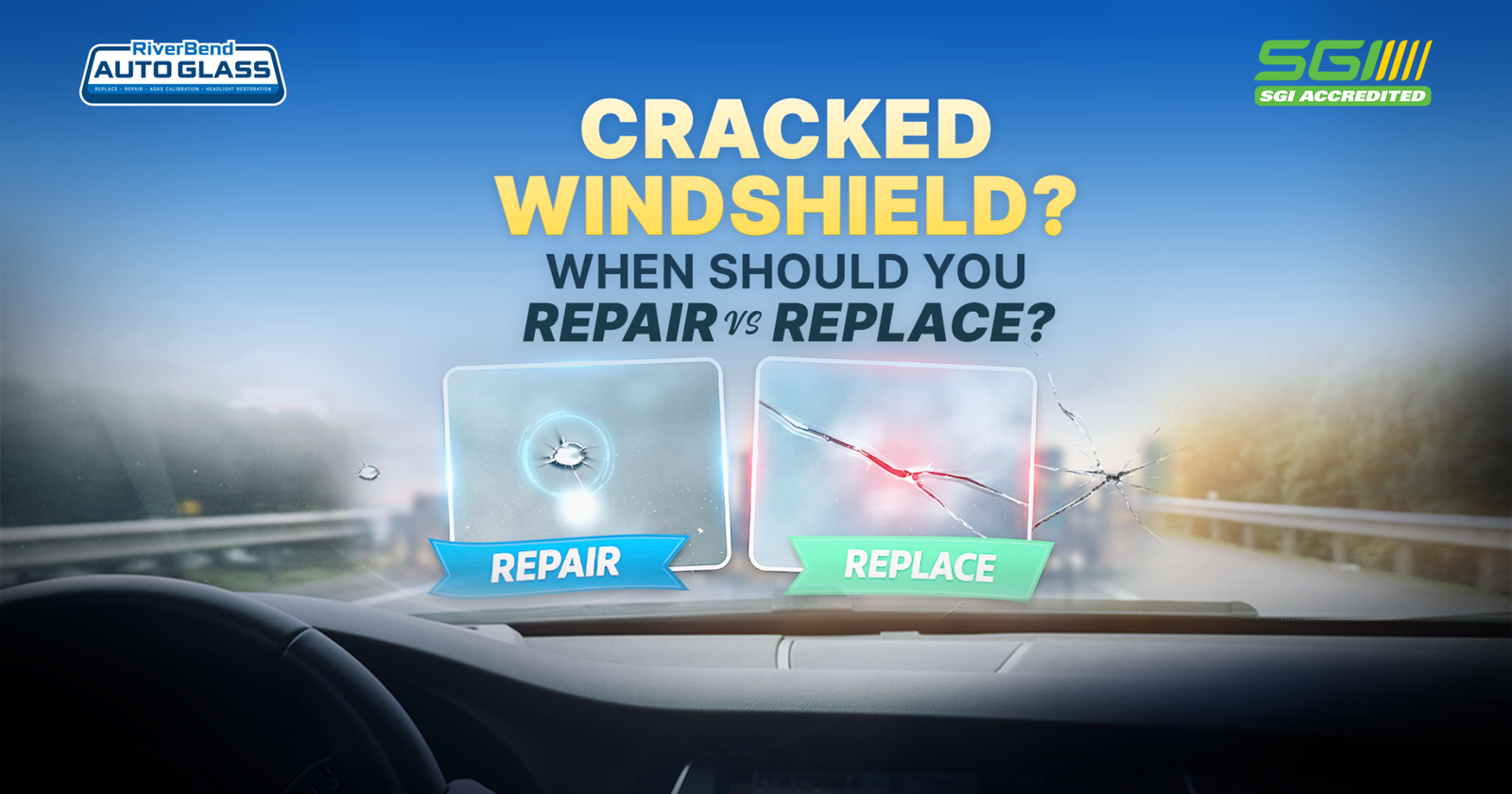
This guide will help you understand repair vs replace windshield decisions. You will learn when a simple fix works. You will also learn when you need a full replacement. Acting quickly saves money, protects your safety, and keeps you legal.
Do not wait until that small chip becomes a big problem. Learn the signs. Take action today.
What Causes Windshield Cracks?
Windshield cracks have several common causes. These include road debris, sudden temperature changes, and poor installation. Some damage is unavoidable. But knowing the causes helps you prevent cracks. You can also drive more carefully. And you can fix small chips early before they get worse.
Road debris (stones, gravel): Road debris is the top cause of windshield damage . Rocks and gravel fly up from other vehicles. They hit your glass at high speed. This creates chips. These small impacts often turn into larger cracks over time. The risk is higher when driving behind trucks. Heavy traffic on highways also increases the danger.
Sudden temperature changes: Heat and cold can crack your windshield. This happens due to thermal stress. Different parts of the glass expand and contract at different rates . A temperature shift of 30 degrees or more can cause a crack to spread.
Rapid shifts are the real problem. Pouring hot water on ice is a bad idea. Blasting the defroster on a frozen windshield is also risky. This creates internal pressure. If a small chip already exists, the glass can crack. Even using the air conditioner on a hot day can cause damage.
In winter, water freezes inside a chip. The ice expands. It pushes the glass apart from within . This turns a small chip into a big crack overnight.
Accidents or impact: Accidents can crack a windshield too. The force transfers through the car frame. The A-pillars are especially vulnerable. But you do not need a major crash. Everyday bumps also cause trouble. Deep potholes are a common culprit. Hitting a curb or slamming a car door can also make a weak spot worse.
After any major impact, inspect your glass. Damage may not appear right away. It can show up later as the glass settles.
Poor installation or weak glass: Poor installation can cause cracks without any impact. If the glass fits incorrectly, it creates tension . Normal driving stress can then crack it. Minor temperature changes can also trigger cracks.
Manufacturing defects are rare but possible. They can also lead to sudden cracks . Watch for warning signs. These include leaks, wind noise, or uneven sealing around the edges . If you see these signs, get a professional inspection. You may need a warranty replacement.
Types of Windshield Damage
Windshield damage comes in different shapes and sizes. Each type decides if you can repair it or need a full replacement. Knowing the difference helps you choose the safest and most cost-effective solution.
Chip (small damage): A chip is a small impact point. Glass is removed or crushed. A stone or debris usually causes it . The chip is smaller than a quarter (about 1 inch). It has no long cracks spreading outward . Chips are often repairable with resin if caught early . This restores strength and stops further cracking.
Crack (line spreading across glass):A crack is a linear break in the windshield. It spreads from an impact point across the glass . It is more serious than a chip. It weakens the windshield’s overall strength. Cracks tend to grow over time . Heat, cold, and road vibration make them worse . Small cracks under 6 inches may sometimes be repaired . Longer cracks usually need full replacement for safety.
Bullseye, Star Break, Combination Break
These terms describe specific impact patterns.
Bullseye: A circular chip with a dark impact point. It has rings around it, like a target . Rounded debris like a stone causes it . If the damage is under 1 inch, it is usually repairable .
Star break: A central impact point with cracks radiating outward . It looks like a star or spider web. Sharp debris usually causes it . If cracks are small (fewer than three legs under 1 inch), it may be repairable .
Combination break: This has features of both a bullseye and a star break . There is a central impact point, rings, and radiating cracks . It is more complex. Repair depends on size and spread. Severe cases need full replacement .
Edge cracks vs surface cracks: Edge cracks start near or reach the windshield’s edge. They are the most dangerous type . The edge is structurally weak . Edge cracks always need full replacement . Do not try to repair them.
Surface cracks happen away from the edge. They may be repairable if short . But they can quickly worsen. If left alone, they can turn into edge cracks . Treat them early to avoid a full replacement.
When Can a Windshield Be Repaired?
A windshield can often be repaired when the damage is small and stable. It also must be away from critical areas. Early repair restores strength. It prevents spreading. It is much cheaper than replacement. But not all cracks or chips qualify. It depends on size, location, and severity.
- Crack is smaller than 6 inches: Cracks under 6 inches are usually repairable. Resin can fully fill the damaged area. This restores strength. It also stops further spreading. However, cracks longer than 6 inches are hard to fix. They typically need full windshield replacement for safety.
- Chip is smaller than a coin:A chip smaller than a coin (about 1 inch) is usually repairable. Resin restores strength and clarity . Larger chips are harder to fix. If the damage goes through both glass layers, you often need a full replacement. Size alone does not always decide the outcome.
- Damage is not in driver’s line of sight: Damage outside the driver’s line of sight is usually repairable. Minor visual distortion is less noticeable there. But damage directly in your viewing area is different. Even small marks can affect visibility and safety. Replacement is often the better option in this case.
- Crack hasn’t spread significantly: A crack is more likely repairable if it is stable. That means it has not grown over time. If the crack is spreading or changing shape, it is active damage . A repair is unlikely to hold. Full replacement becomes the safer choice.
- Located away from the edge: Damage away from the windshield edge is usually repairable. The center of the glass is more stable . But cracks near the edge are different. If a crack is within about 2 inches of the edge, it cannot be safely repaired. It weakens the windshield structure. You need a full replacement.
When Should You Replace the Windshield?
You should replace your windshield when the damage is too large or unstable. Also replace it if the damage sits in a critical area. In these cases, repair is unsafe or ineffective. Full replacement restores strength, visibility, and safety.
- Crack longer than 6 inches:Cracks over 6 inches usually need a full replacement. Resin cannot fill long fractures properly . The glass has significant weakness. Even a partial repair may still spread over time . Most shops will not repair cracks beyond 6 inches.
- Multiple cracks or severe damage:Multiple cracks or severe damage need a full replacement. The glass has lost its overall strength . Complex breaks and branching cracks cannot be reliably fixed. Even if you try, weak spots may remain. Replacement is safer and often cheaper in the long run.
- Damage in driver’s direct view: Damage in your direct line of sight usually needs replacement . Even a repaired area can cause slight distortion . This affects visibility in low light or glare. It may also fail a safety inspection. For your safety, replacement is the best choice.
- Crack reaching the edge of windshield: A crack at the edge needs immediate replacement . It weakens the bond between glass and frame . Edge damage cannot be safely repaired. It also spreads faster due to normal vehicle flexing . This raises the risk of windshield failure in a crash. Full replacement is the only safe option.
- Compromised structural integrity: You must replace a windshield if its structure is weak . This can happen even without visible cracks. Look for signs of trouble. These include flexing glass, wind noise, or leaks . Also check for separation from the frame. These issues mean the adhesive bond has failed . A new windshield is needed to protect you and your passengers.
Repair vs Replacement: Cost Comparison
Repairing a windshield is usually much cheaper than replacement. That is why repair is the preferred option for minor damage. Costs depend on damage severity, your vehicle type, and insurance coverage. Many policies fully cover small chip repairs. Full replacement costs more but is sometimes unavoidable for safety.
Repair is cheaper and faster
Windshield repair costs 50 to 150 dollars . Most drivers pay around 75 to 100 dollars . The job takes 30 to 60 minutes . Small chips and short cracks are often covered by insurance. You may pay little or nothing out of pocket . Repair is a fast and cost-effective choice.
Replacement is more expensive but necessary for safety
Windshield replacement costs much more. Prices range from 200 to over 1,000 dollars . Luxury cars cost more . Vehicles with ADAS features (like lane assist or automatic braking) also cost more . They need special glass and recalibration . Despite the high cost, replacement is necessary for serious damage. It keeps you safe and your car working properly.
Insurance coverage considerations
Safety Risks of Ignoring a Cracked Windshield
Driving with a cracked windshield is dangerous. It is not just a cosmetic issue.
A crack can reduce your view. It causes distortion and glare. This is worse at night or in bad weather.
A cracked windshield is also weaker. In a rollover crash, your windshield helps support the roof. If it is damaged, the roof can crush inward.
Cracks can also affect your airbags . A weak windshield may not hold the airbag in place. The airbag could push through the glass instead of protecting you .
Your windshield also keeps you inside the car during a crash. It stops you from being thrown out. A damaged one may not do its job.
Damage can spread without warning. Temperature changes can make it worse. Road vibrations add stress. One bump can turn a small chip into a long crack . This creates a sudden driving hazard.
In Saskatchewan, police can ticket you for driving with a large crack. It is unsafe and against the law.
Do not ignore the problem. Repair or replace your windshield as soon as you see damage. It keeps you safe. It also protects your passengers and others on the road.
How Quickly Should You Fix It?
Professional vs DIY Repair
DIY windshield repair kits are cheap. But they often do not work well. Professional repairs cost more. But they give you stronger, clearer, and safer results. Pros use proper tools and resin injection. For the best durability and safety, go with a professional.
Benefits of professional service
Professional repair is more reliable than DIY. Technicians use industrial-grade resins. They also use vacuum-pressure injection tools and UV curing systems. This gives you a stronger, clearer, lasting repair.
DIY kits are cheaper. But they often trap air inside. They can leave visible marks. They may fail over time . Professionals also offer expertise and warranties . You get safer, more durable results.
Risks of DIY kits
DIY kits can cause poor clarity. The bond may be weak or fail completely. If you apply it wrong, you can make the crack worse. DIY kits may trap moisture inside. This creates internal stress. The repair can fail weeks later .
Some insurers may not accept DIY repairs. Improper fixes can void your coverage . Most importantly, DIY kits give a false sense of safety. Your windshield may still be weak even after the fix.
When DIY is acceptable
DIY repair is acceptable in limited cases . Use it as a temporary emergency fix when no pro is available. Or use it for very small chips away from your view . You might try DIY on a low-value vehicle. Or when cost is a major barrier.
But professional repair is still the better choice. It is safer and lasts longer. For peace of mind and real safety, call a pro.
Tips to Prevent Windshield Damage
You can prevent windshield damage with safe driving habits. Avoid sudden temperature changes. Park carefully. Inspect your glass often. These steps reduce costly repairs and help your windshield last longer.
- Keep distance from trucks: Stay at least four seconds behind trucks. This helps you avoid flying debris. On gravel roads, increase to six seconds. Do not stay beside loaded trucks. Loose stones and gravel can fly off and hit your glass at highway speed.
- Avoid sudden temperature changes: Sudden temperature changes cause thermal stress in glass. Never pour hot water on an icy windshield. Do not blast hot or cold air suddenly . Let your car warm up or cool down slowly. Use the defroster or ventilation gently. This prevents cracks in extreme winter or summer conditions.
- Park in shaded or safe areas:Park in shaded spots during summer. This reduces heat and UV exposure . Use a garage or sunshade when you can. In winter, avoid parking near falling ice or trees. Stay away from construction zones. Safe parking prevents temperature stress. It also stops debris from hitting your glass.
- Regular inspection: Check your windshield often. Look for new chips, cracks, or edge damage . Do this after any rough drive or impact . Also check your wiper blades. Worn blades can scratch your glass . Finding damage early lets you fix it fast. A quick repair is cheap. Waiting leads to costly replacement . Early action keeps you safe and saves you money.
Conclusion
A cracked windshield is not just ugly. It can hurt your safety.
It can block your view. It also weakens your car. Windshields help support the roof in a crash. They also help airbags work the right way.
If your chip is small and stable, repair it now. If the damage is long or spreading, get a replacement. Also replace it if the crack sits in your view or reaches the glass edge.
Acting early is safer. It is also much cheaper than waiting.
Call Riverbend Autoglass today. Our team is ready to help. We offer fast, reliable service in Saskatoon. Mobile repair comes to you. Same-day appointments are available.
Do not put it off. Fix your windshield now. Stay safe on the road.
Call us or book online. Your safety is worth it.