
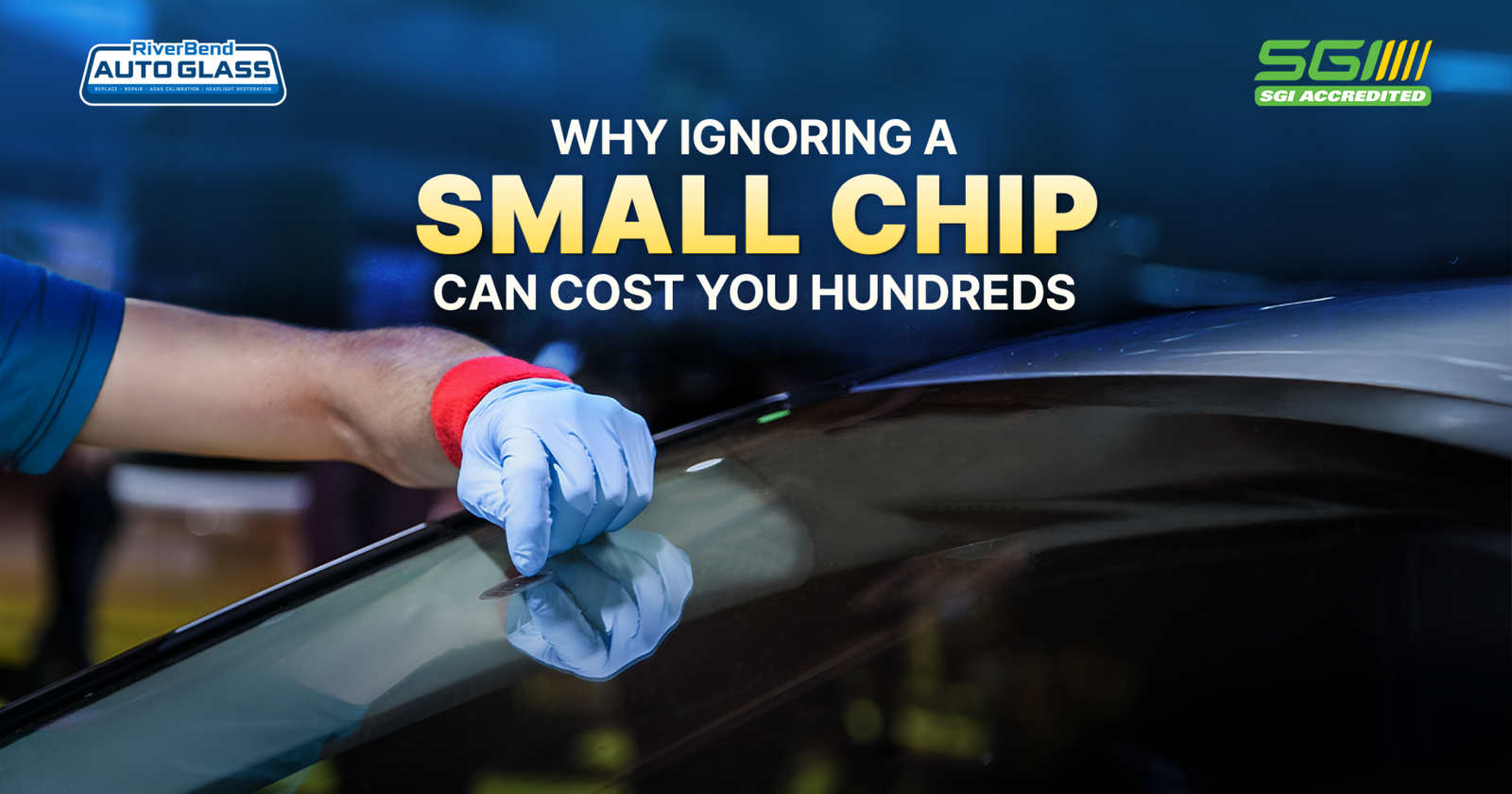
It happens fast. A tiny rock hits your windshield. You hear a small ping. Then you see a chip.
It looks harmless. Easy to ignore. But that small chip is tricky. Temperature changes make it worse. Road vibrations shake the glass. Even normal driving puts pressure on the weak spot. Soon, that tiny chip becomes a long crack.
Wondering how to fix windshield chip cost before it rises? A simple repair taking 30 minutes runs around 75 dollars. Delay it, and you face a 500 dollar or more replacement. Worse, a cracked windshield is a safety hazard for you and your family.
This guide explains why small damage costs big money. More importantly, it shows why fixing chips early protects your wallet and your safety.
What Is a Windshield Chip?
A windshield chip is a small dent or pit in your car’s glass. It happens when a tiny rock or debris hits the windshield. The damage looks minor. But it weakens the glass. Over time, that small spot can turn into a long crack.
Definition and Types
A chip is a small impact mark. The glass is broken or dented, but not cracked through. Common types include bullseye, star break, and half-moon patterns. Most chips are smaller than one inch. Unlike cracks, chips stay in one spot. But road stress and heat can make them spread fast.
Common Causes
Flying debris. Rocks and gravel from other vehicles are the top cause. Following trucks too closely or driving on winter sand increases your risk.
Sudden temperature changes. Heat and cold stress the glass. Blasting the defroster on a cold day or turning on AC in summer heat can turn a tiny chip into a big crack .
Road conditions. Potholes, gravel roads, and construction debris cause vibrations. These shakes make small chips worse. Driving slowly and keeping distance from trucks helps protect your windshield.
How to Fix Windshield Chip Cost
Want to fix windshield chip cost in Saskatoon? Act fast. Most local chip repairs run between 80 and 150 dollars . The job takes about 30 minutes. Many Saskatoon shops offer free assessments too.
Wait too long, and that small chip becomes a long crack. A full windshield replacement jumps to 300 to 800 dollars or more . For newer cars with sensors, replacement can hit 800 to 1,500 dollars.
Here is good news for Saskatchewan drivers. SGI, our government insurer, offers a glass deductible buydown. You can lower your glass deductible to as low as 100 dollars . Many comprehensive insurance plans cover chip repairs fully with no deductible . Fixing it early saves your wallet and keeps you safe.
Why Small Chips Get Worse Over Time
A small windshield chip does not stay small forever. Three things make it worse: temperature changes, road vibrations, and moisture.
Temperature changes. Saskatoon winters are harsh. One day it is cold. The next day it warms up. Glass expands when heated and contracts when cooled . Blasting your defroster on a freezing morning? That sudden heat can turn a tiny chip into a long crack overnight.
Road vibrations. Saskatoon roads have potholes, gravel, and rough patches. Every bump shakes your car. Those vibrations act like tiny hammers on the damaged glass . Over time, the chip spreads.
Moisture and dirt. Water seeps into the chip. When temperatures drop, that water freezes and expands . Dirt inside the chip also blocks proper repair later.
What happens next? That minor 80 to 150 dollar repair becomes a 500 dollar or more replacement. A cracked windshield is also a safety risk. It can fail a vehicle inspection. Fix the chip now. Avoid the headache later.
The Real Cost of Ignoring a Chip
Ignoring a small chip can turn a minor $75 repair into a $500+ replacement. Delaying action costs money, time, and convenience, making prompt repair far more cost-effective.
a. Cheap Repair vs Expensive Replacement
| Factor | Chip Repair | Full Windshield Replacement |
| Typical Cost | $50 – $150 (avg. $75–100) | $200 – $1,000+ (avg. $300–500 for standard sedan) |
| Cost for Luxury/ADAS Vehicles | $75 – $150 (same as standard) | $800 – $1,500+ (due to recalibration and OEM glass) |
| Insurance Deductible | Often $0 (many policies waive deductible for repairs) | Standard comprehensive deductible applies ($250–1,000) |
| Time to Complete | 30 – 60 minutes | 1 – 3 hours (+ 1–2 hours for ADAS recalibration) |
| Mobile Service Available? | Yes – technician comes to you | Rare – typically requires shop visit |
| Drive Away Immediately? | Yes – no curing time needed | No – wait 1+ hour for adhesive to cure; 24 hours before car wash |
| Quality Outcome | Retains factory seal around edges | Aftermarket glass may have fitment or wind noise issues |
The math is clear: ignoring a chip can cost you 4 to 10 times more than fixing it immediately. A $75 problem becomes a $400+ problem—or worse. The convenience differences are equally stark: a 30-minute mobile repair versus a half-day shop visit. Do not wait.
b. Insurance Impact
- Many policies cover chip repair for free: Many auto insurance policies cover windshield chip repairs for free, often with zero deductible. This saves you $75–100 now and prevents costly $400–1,000 replacements later. Check your policy—ignoring a chip could mean missing out on free repair coverage and paying hundreds unnecessarily.
- Ignoring it may lead to higher out-of-pocket costs: Ignoring a chip can lead to higher out-of-pocket costs. While chip repairs are often free, a full replacement usually requires paying your deductible—$250–$1,000—and may affect future premiums or claim limits. Prompt repair saves money and preserves insurance benefits, preventing unnecessary expenses later.
Safety Risks You Shouldn’t Ignore
A small windshield chip is not just an eyesore. It is a real safety risk.
Here is what many drivers do not know. Your windshield provides up to 30 percent of your car’s structural strength . In a rollover accident, that strength can stop the roof from caving in. A chip weakens this protection.
Airbags need a strong windshield too. During a crash, the passenger airbag pushes against the glass. The windshield acts like a backboard . If the glass is chipped or cracked, the airbag can blow right through it . That means no protection when you need it most.
Your vision gets worse. A chip creates glare from sunlight. At night, it makes a halo effect around headlights . This can hide pedestrians, cyclists, or other cars. Even small damage can cause eye strain and make you tired faster on long drives .
Cold weather makes things worse. When temperatures drop, a chipped windshield is 60 to 80 percent more likely to crack. Turning on your defroster on a freezing morning? That sudden heat can spread the chip instantly.
Ignoring a chip is not worth the risk. Fixing it restores your windshield’s strength, keeps your airbags working, and gives you clear vision. A tiny chip seems minor. But it could save your life or someone else’s.
Legal Issues (Depending on Location)
Ignoring a windshield chip can break the law. Most places require clear driver visibility. Even a small chip in your line of sight may lead to tickets, failed inspections, or registration problems. Fixing it fast keeps you legal and avoids trouble.
- Laws about damaged windshields: Windshield damage laws vary by location. In the US, states ban damage that blocks driver vision. Some states have regular inspections. The UK, Canada, and Australia set size limits. They can also issue defect notices. A chip that is legal in one area may be a violation just miles away. That is why prompt repair matters.
- Possible fines or penalties: Windshield violations can cost you. Fines, license points, and higher insurance rates are all possible. In the US, fines range from 25 to 500 dollars. In the UK, you can pay up to 2,500 pounds and get three penalty points. In Australia, fines run from 100 to 500 dollars plus reinspection fees. Ignoring a small chip often costs more than fixing it right away.
- Safety inspection failures: Safety inspections often fail for certain damage. Chips in the driver’s line of sight are a common reason. Cracks longer than 6 to 8 inches will fail too. Cracks that reach the edge of the windshield are also a problem. Failure means repair costs, reinspection fees, possible fines, and registration holds. Fixing a small chip early — often around 75 dollars — prevents these legal and financial headaches.
Signs You Need Immediate Repair
Some windshield damage is no big deal. Other damage is an emergency. Chips in your line of sight, large cracks, multiple impacts, or odd behavior all signal high risk. Get professional help right away. It prevents safety hazards and costly replacement.
- Chip larger than a coin: Any chip bigger than one inch (25 mm) is high-risk. It will likely spread. Larger chips weaken the glass around them. They also let in moisture and dirt. This damage may need a full windshield replacement instead of a simple repair. See a professional immediately.
- Crack starting to spread: Is your chip showing visible spreading? Look for lines extending out. New branches forming. The damage getting bigger. That is urgent. Glass fractures naturally grow under heat, vibration, and flexing. A short crack becomes a long one fast. Get professional repair now. Delay can make replacement unavoidable.
- Chip in driver’s line of sight: Any chip right in front of your steering wheel needs immediate attention. Even small chips cause glare and distortion. They distract your eyes from the road. This creates safety risks and legal trouble too. Schedule professional repair or replacement without delay.
- Multiple chips appearing: Multiple chips weaken your windshield a lot. They can be clustered together or scattered around. If damage appears fast, it may point to defects, age, or environmental stress. Repairing several chips can cost almost as much as replacement. Get a professional evaluation. They will tell you if repair or full replacement is safer and more cost-effective.
How to Prevent Further Damage
A small chip does not have to become a big crack. Take action now. Here is how to stop the damage from getting worse.
Avoid sudden temperature changes. Do not blast hot air on a freezing windshield. Do not pour cold water on a hot one. Park in the shade or a garage when you can. This lowers thermal stress on the glass.
Drive carefully on rough or gravel roads. Stay back from vehicles that may kick up rocks or debris. This stops new impacts from hitting your already damaged glass.
Cover the chip temporarily. Use clear packing tape. This keeps moisture and dirt out until you see a professional. It is not a permanent fix. But it helps.
Most importantly, get the damage inspected quickly. Call a technician as soon as you notice the chip. They can repair it before it gets worse. Acting fast saves you time and money.
When to Repair vs Replace
Not every chip can be fixed. Size, depth, location, and spreading all matter. These factors decide if a simple repair works or if you need a full windshield replacement.
Repair: small, shallow chips
-
Size matters significantly: The best chip for repair is under one inch (25 mm) across. That is about the size of a coin. Chips this size let repair resin fill the damage completely. Larger chips may still get fixed, but success rates drop. Many technicians use one inch as their repair limit.
-
Depth is equally important: Depth matters a lot for repair. Chips that only hurt the outer glass layer can often be fixed. Damage that reaches the inner layer usually needs replacement. A dark or black center means full penetration. Repair is unlikely then.
-
Location determines safety: Location affects your repair choice. Chips outside the driver’s main line of sight are safer to fix. Chips in the central viewing area may leave distracting marks. Repairs there can reduce visibility and cause eye strain. Replacement is often safer for this zone.
-
Cleanliness affects outcomes: Clean chips repair best. Fresh damage without dirt, moisture, or oil lets resin bond well. Chips exposed to rain, road salt, or humidity for a long time may not repair well. Replacement becomes the safer option then.
A professional chip repair injects clear resin into the damage. It restores strength. It stops spreading. It improves clarity. This fix is safe and durable. It costs far less too — usually 50 to 150 dollars and 30 to 60 minutes. Full replacement runs 200 to 1,000 dollars or more and takes hours.
Replace: Large Cracks or Multiple Damages
Some windshield damage is too big to fix. Large cracks, edge damage, multiple chips, or deep spots often need a full replacement. Here is when to skip the repair and get a new windshield.
- Large cracks require replacement: Cracks longer than six inches (about 15 cm) usually need replacement. Repair resin cannot fill long cracks well. The glass strength is already compromised. Some technicians may try repairs up to twelve inches. But most safety guidelines say replace once a crack passes half the windshield width.
- Edge cracks demand immediate replacement: Edge cracks need fast action. This means cracks within two inches (50 mm) of the windshield edge. Or cracks that already reach the edge. These weaken the bond to your car frame. They compromise structural support. They also grow very quickly. The risk of failure goes up in crashes or even during normal driving.
- Multiple damage sites require replacement: Multiple chips often mean replacement. That means three or more chips. Or several chips clustered close together. Repairing many sites adds weak points. It also creates distortions. The failure risk goes up. Plus, the total repair cost often matches a new windshield. Replacement is safer and more economical.
- Deep damage to the driver’s line of sight also mandates replacement: Some chips are too deep to fix. This includes chips that go through both glass layers. It also includes any chip in the driver’s line of sight. For safety and legal reasons, do not delay. Schedule a replacement right away. Cost ranges from 200 to 1,000 dollars or more. That is far less than a crash from poor visibility.
- Expert recommendation importance: Only a trained technician can decide repair versus replacement. They use special tools to check the damage. They look for microfractures and contamination. Expert advice ensures safety, durability, and good value. If you are unsure, get a second opinion.
Conclusion
That tiny chip may seem harmless. But it can quickly turn into a costly and dangerous problem. A small repairable blemish can become a long crack. That crack then needs a full windshield replacement. You pay hundreds of dollars instead of a simple 75 dollar repair.
Beyond cost, ignoring a chip brings other risks. Reduced visibility. Weakened structural strength. Greater injury during accidents.
The good news? Prevention is simple. A professional inspection takes just minutes. Repairs often take under an hour. Many insurance plans cover it with zero out of pocket cost.
Do not wait for the chip to spread. Call Riverbend Auto Glass today. Book a professional inspection or repair. Save your money. Protect your passengers. Drive with peace of mind.