Modern vehicles are smarter and safer than ever before, thanks to Advanced Driver Assistance Systems (ADAS). These technologies help drivers avoid accidents, improve road awareness, and enhance overall driving comfort. From lane departure warnings to automatic emergency braking, ADAS features have become standard in many new vehicles.
However, these systems rely on highly accurate cameras, radar sensors, and electronic components to function properly. Even a slight misalignment can affect performance and compromise safety. That’s why professional ADAS re-calibration is essential whenever certain repairs or replacements are performed on your vehicle.
In this guide, we’ll explain what ADAS re-calibration service, why it matters, when it’s needed, and how professional calibration services help keep you safe on the road.
What Is ADAS Re-Calibration?
ADAS re-calibration is the process of adjusting and aligning a vehicle’s cameras, radar sensors, lidar systems, and other electronic components to ensure they operate according to manufacturer specifications.
These systems continuously monitor the road, nearby vehicles, lane markings, and traffic conditions. For ADAS features to work correctly, sensors must be positioned with extreme precision.
There are two primary types of ADAS calibration:
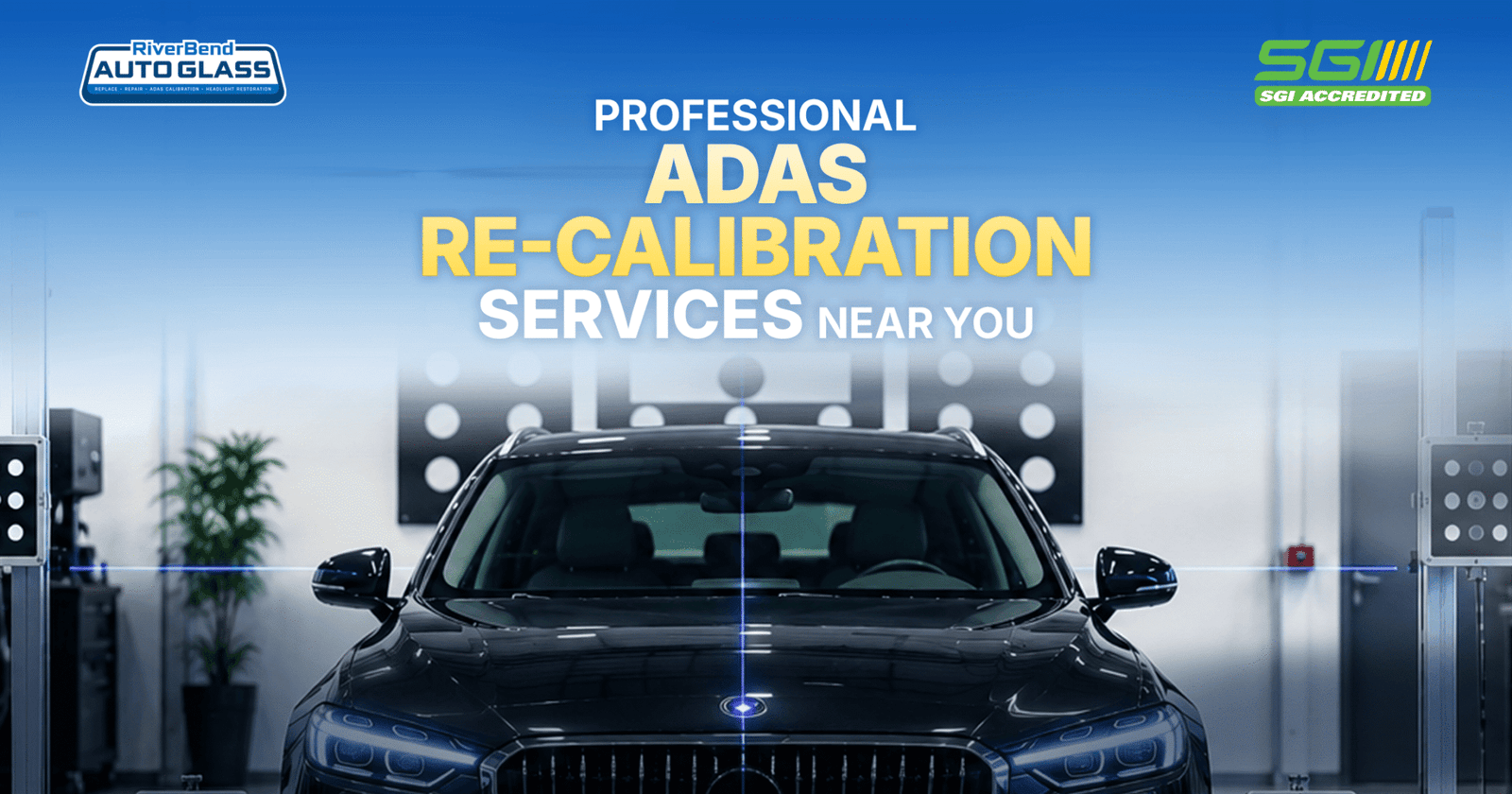
Static Calibration: Static calibration is performed inside a controlled workshop environment. Specialized targets, measurement tools, and manufacturer-approved equipment are used to align cameras and sensors accurately.
Dynamic Calibration: Dynamic calibration requires driving the vehicle under specific road conditions while diagnostic equipment communicates with the vehicle’s systems. The vehicle learns and adjusts sensor positioning in real-world driving situations.
How cameras, sensors, and radar systems are adjusted
Different sensors require different calibration approaches:
Forward-facing cameras are adjusted through software. The camera sends a “known-good” image to the vehicle’s computer, which compares it to the current view and crops the image to match the correct field of view . This ensures the camera focuses on the right area of the road.
Radar sensors are typically calibrated by adjusting their physical position. Long-range radar sensors, which can measure up to 600 feet ahead, have adjustment screws behind the sensor to adjust direction and elevation . Mid-range sensors, used for blind-spot monitoring and cross-traffic detection, may be calibrated using similar methods.
Multi-sensor calibration ensures cameras, radar, and LiDAR sensors work together. Their coordinate systems are aligned so data from all sensors can be accurately fused . This is critical for features like automatic emergency braking and adaptive cruise control.
Common ADAS Features That Require Calibration
Many advanced safety systems depend on properly calibrated sensors and cameras.
- Lane Departure Warning (LDW) uses a forward‑facing camera to monitor lane markings. If you drift without signaling, the system alerts you. After a windshield replacement, the camera’s angle may shift, causing false warnings or missed lane departures.
- Lane Keeping Assist (LKA) goes a step further—it gently steers you back into your lane. This system relies on the same camera as LDW. Misalignment can cause the vehicle to pull or tug the steering wheel incorrectly.
- Forward Collision Warning (FCW) monitors the distance to the vehicle ahead. If a collision risk is detected, it alerts you. Calibration ensures the camera accurately judges distances and speed differentials.
- Automatic Emergency Braking (AEB) applies the brakes if a collision is imminent and you do not react. This radar‑based system must be precisely aligned to detect obstacles at the correct distance.
- Adaptive Cruise Control (ACC) maintains a set speed while adjusting to traffic ahead. A misaligned radar sensor can cause your vehicle to follow too closely or brake too late.
- Blind Spot Monitoring (BSM) uses radar sensors in the rear bumper to detect vehicles in adjacent lanes. While often mounted in the bumper, some systems require recalibration after front‑end work or sensor replacement.
- Traffic Sign Recognition (TSR) reads speed limit and other traffic signs using the forward‑facing camera. Misalignment can result in incorrect speed limit displays on your dashboard.
- Parking Assistance Systems use ultrasonic sensors and cameras to help you maneuver. While some sensors are in the bumpers, rearview cameras can be affected by glass replacement or frame alignment.
Why ADAS Re-Calibration Is Important
Proper ADAS calibration plays a critical role in vehicle safety.
Ensures safety systems function correctly. Your lane keep assist, automatic emergency braking, and adaptive cruise control rely on precise sensor alignment. A windshield replacement or collision repair can shift these components. Recalibration restores their accuracy, so they activate at the right moment .
Prevents false alerts and missed warnings. A miscalibrated system may trigger warnings when nothing is there—or fail to warn you when a hazard is present. This reduces driver trust and increases accident risk. Proper calibration eliminates these errors .
Maintains manufacturer specifications. Vehicle manufacturers require recalibration after any repair that disturbs sensor positions. Skipping this step violates those specifications and may void your warranty .
Protects drivers, passengers, and pedestrians. ADAS features are designed to prevent collisions and reduce crash severity. When calibrated correctly, they can save lives. When misaligned, they provide a false sense of security. Recalibration is not optional—it is essential for everyone’s safety .
When Does a Vehicle Need ADAS Re-Calibration?
Several common repair and maintenance situations require ADAS calibration
After Windshield Replacement
- Camera alignment changes. Many ADAS components—especially forward‑facing cameras for lane departure warning, traffic sign recognition, and automatic high beams—are mounted on or directly behind the windshield. When the windshield is removed and replaced, the camera’s position changes slightly. The new glass may have different optical properties. Even a tiny shift of a fraction of a degree affects the camera’s view.
- OEM recommendations. Most manufacturers require ADAS recalibration after any windshield replacement. Check your owner’s manual or consult a professional. Do not assume your safety systems are working—many vehicles give no warning when calibration is needed.
After Collision Repairs
- Impact can shift sensors and cameras. Even minor fender benders can knock ADAS sensors out of alignment. A 5 mph collision may shift the bumper where blind‑spot radar sensors are mounted. A parking lot scrape can misalign parking sensors. More significant collisions can shift the vehicle’s entire frame, affecting every sensor’s position.
- What needs recalibration? Structural repairs, bumper replacements, and bodywork all require recalibration. Your insurance claim for collision repair should include ADAS calibration. Verify that your repair shop includes calibration in their estimate .
After Suspension or Wheel Alignment Work
- Vehicle geometry changes. Your ADAS sensors measure the vehicle’s position relative to the road. When you change suspension components or adjust wheel alignment, the vehicle’s ride height, angle, and steering geometry change. These changes affect the forward‑facing camera’s view, the radar sensor’s aim, and the steering angle sensor’s readings.
- Manufacturer requirements. Many OEMs require a wheel alignment check before ADAS calibration can begin. A thrust angle error, incorrect ride height, or faulty steering angle sensor will distort ADAS performance .
After Sensor or Camera Replacement
- New components require calibration. If an ADAS sensor or camera is damaged and replaced, the new component must be calibrated to the vehicle. A new forward‑facing camera needs to learn the road geometry. A replacement radar sensor must be aligned with the vehicle’s centerline.
- Initialization vs. calibration. Some systems require initialization (setting baseline parameters) after component replacement, while others require full static or dynamic calibration. Your technician will determine the correct procedure for your vehicle.
Signs Your Vehicle May Need ADAS Calibration
Drivers may notice several indicators that suggest calibration is necessary.
- Dashboard warning lights
- Unexpected braking interventions
- Unintended steering corrections
- Inaccurate lane detection
- Adaptive cruise control malfunctions
- Blind spot monitoring errors
- Sensor malfunction messages
- Reduced reliability of safety features
If any of these symptoms occur, professional inspection is recommended immediately.
The Professional ADAS Re-Calibration Process
Professional ADAS recalibration includes inspection, diagnostics, sensor alignment, static or dynamic calibration, system testing, and verification to ensure all safety features operate accurately and meet manufacturer standards.
Vehicle Inspection
The technician begins by examining your vehicle for any damage or wear that could affect sensor positioning. They check the windshield for cracks that could obstruct the forward-facing camera, inspect bumpers for radar sensor damage, and verify all sensors are properly mounted. This inspection identifies any issues that must be addressed before calibration can proceed.
Diagnostic Scan
Using a diagnostic scan tool, the technician connects to your vehicle’s onboard computer and retrieves error codes from the ADAS modules. This scan checks whether sensors are communicating properly and records pre-calibration data as a reference point.
Static Calibration Procedure
Static calibration occurs in a controlled shop environment. The technician places specialized targets at precise distances and angles around your vehicle. Using diagnostic tools, they trigger the calibration process. Your vehicle’s computer compares sensor readings to target positions and adjusts its calculations accordingly. This method requires a level floor, proper lighting, and manufacturer-specific target patterns.
Dynamic Road Calibration
Some vehicles also require dynamic calibration. The technician drives the vehicle on a clear road with visible lane markings at a specified speed (typically 40-65 km/h) for 5-20 minutes. The onboard computers use live sensor data to self-calibrate, fine-tuning systems like lane keep assist and adaptive cruise control.
Final Verification & Testing
After calibration, the technician performs a final diagnostic scan to confirm all sensors read accurately and error codes have cleared. They test each ADAS feature to ensure proper function and provide documentation of the calibration for your records.
Benefits of Choosing Professional ADAS Calibration Services
Your vehicle’s safety systems are only as reliable as the calibration behind them. When you choose professional ADAS calibration services, you are not just checking a box—you are investing in your safety and the safety of everyone on the road.
Certified Technicians
Professional ADAS calibration is performed by technicians who have completed formal training and certification programs. These technicians understand the complex interplay between cameras, radar sensors, and your vehicle’s onboard computers. They know how to identify issues that untrained eyes would miss. When you choose certified professionals, you are choosing expertise you can trust.
Manufacturer-Approved Equipment
Professional calibration services use equipment that meets or exceeds manufacturer specifications. This is not a one-size-fits-all approach. Different vehicles require different target patterns, calibration procedures, and diagnostic tools.
Accurate Results
Professional calibration restores your ADAS features to factory specifications. Lane departure warning triggers at the correct time. Automatic emergency braking detects obstacles at the proper distance. Adaptive cruise control maintains the right following distance. Every system works exactly as the manufacturer intended.
Enhanced Road Safety
Properly calibrated ADAS features save lives. They react faster than humans. They detect hazards you might miss. They apply brakes when you cannot. But they only work when properly calibrated.
Compliance with Vehicle Standards
Many vehicle manufacturers require ADAS calibration after specific repairs to maintain warranty coverage. Insurance companies may require proof of calibration for claims. Professional services provide documentation that demonstrates compliance.
Risks of Skipping ADAS Re-Calibration
Skipping ADAS recalibration can lead to inaccurate sensor readings, malfunctioning safety features, increased accident risk, costly repairs, and reduced vehicle safety when critical driver-assistance systems are needed most.
Reduced system accuracy. A miscalibrated ADAS system is worse than no system at all. Your lane keep assist may not activate when you drift, or it may trigger when you are centered in your lane. Your automatic emergency braking may fail to detect a stopped vehicle ahead. Your adaptive cruise control may maintain the wrong following distance. These systems may give you false confidence, but they will not protect you in a real emergency.
Increased accident risk. The math is simple. Miscalibrated ADAS systems are less effective. Less effective safety systems increase your risk of being in an accident. If you are in an accident that could have been prevented by properly calibrated ADAS features, you bear responsibility for that outcome.
Potential insurance complications. If you file a claim for windshield replacement or collision repair and your insurance policy requires ADAS calibration, skipping calibration may void your coverage. Your insurance company may deny a future accident claim if they discover calibration was skipped after a previous covered repair.
Higher long‑term repair costs. A delayed calibration does not save money. A miscalibrated camera that causes your vehicle to pull to one side may wear tires unevenly, requiring premature replacement. A miscalibrated adaptive cruise control that brakes aggressively may wear brake pads faster. The most expensive consequence is the accident itself.
How Long Does ADAS Re-Calibration Take?
Calibration times vary depending on the vehicle and system requirements.
Typical Service Times
Most ADAS calibration services take between 1 and 4 hours.
Factors Affecting Calibration Duration
- Vehicle make and model
- Number of sensors requiring calibration
- Static versus dynamic procedures
- Additional repairs needed
- Manufacturer-specific requirements
Some luxury and advanced vehicles may require longer service times.
How Much Does ADAS Re-Calibration Cost?
Calibration costs vary based on vehicle complexity and service requirements.
Factors Influencing Pricing
- Vehicle make and model: Luxury and European vehicles often require more complex calibration procedures and OEM‑specific equipment. This can add $100–300 or more to the total cost compared to mass‑market vehicles.
- Type of calibration required: Static calibration in a shop typically costs $200–400. Dynamic calibration (road‑driven) may cost $150–300. Combined static and dynamic calibration can range from $300–600.
- Shop location and equipment: Dealerships tend to charge higher rates ($300–600+) compared to independent SGI‑accredited auto glass shops ($150–400). Shops with advanced, automated calibration tools may charge a premium for precision.
Vehicle Make and Model Considerations
Vehicles with more advanced ADAS features (automatic emergency braking, lane keep assist, adaptive cruise control, traffic sign recognition) require more extensive calibration. Some manufacturers require specific calibration procedures that take longer and require proprietary equipment. For example, Tesla, BMW, Mercedes‑Benz, and Audi often cost more to calibrate than Honda, Toyota, or Ford.
Type of Calibration Required
- Static calibration (controlled shop environment, targets placed around vehicle) typically costs $200–400.
- Dynamic calibration (road‑driven, requires specific conditions) typically costs $150–300.
- Combined calibration (both static and dynamic) typically costs $300–600.
Some vehicles require only static calibration. Others require both. Your auto glass shop will determine the correct procedure for your vehicle.
Why Choose Our ADAS Re-Calibration Services?
When your vehicle’s safety systems need attention, choosing the right service provider matters.
- Experienced technicians. Our team is certified and trained in the latest ADAS calibration procedures. We understand the unique requirements of each manufacturer—from forward‑facing cameras to radar and ultrasonic sensors—and follow OEM‑specified protocols for every vehicle . Unlike general repair shops, we specialise in ADAS, ensuring your vehicle is handled by professionals who know the intricacies of modern safety systems.
- Advanced calibration technology. We use the latest diagnostic tools and laser‑guided target setups to realign sensors to factory specifications, ensuring millimeter‑perfect accuracy . Our equipment connects to cloud databases to provide always‑up‑to‑date calibration specifications, eliminating guesswork from the process.
- Quality assurance checks. Before we return your vehicle, we perform a series of tests. We inspect the seal around the perimeter for gaps, verify that ADAS calibration completed successfully, and clear any diagnostic trouble codes from your vehicle’s computer. We provide complete digital documentation of every step—from vehicle identification to final calibration results.
- Fast turnaround times. We understand that your time is valuable. Our streamlined workflow minimises setup and adjustment time, so you get back on the road quickly without compromising quality . Most calibrations are completed within a few hours, and we offer flexible scheduling to fit your busy life.
- Commitment to vehicle safety. Proper ADAS calibration is not just a technical requirement—it is a safety imperative. A misaligned camera or sensor can compromise your vehicle’s ability to detect hazards, respond to driving conditions, or activate emergency features . We take that responsibility seriously. Every calibration we perform is backed by a commitment to restoring your vehicle’s safety systems to OEM standards.
Frequently Asked Questions (FAQs)
Can I drive without ADAS calibration?
While the vehicle may still operate, safety systems may not function correctly, increasing the risk of accidents.
Is ADAS calibration required after every windshield replacement?
In most cases, yes. Vehicles with windshield-mounted cameras typically require recalibration after replacement.
How often should ADAS systems be calibrated?
Calibration is generally needed after repairs, windshield replacement, collisions, suspension work, or sensor replacement rather than on a routine schedule.
Does insurance cover ADAS re-calibration?
Many insurance policies cover calibration when it is part of an approved repair following a covered claim. Coverage varies by provider and policy.
What happens if ADAS sensors are misaligned?
Misaligned sensors can cause false warnings, missed hazards, inaccurate braking responses, and reduced effectiveness of safety systems.
Conclusion
ADAS technology plays a vital role in modern vehicle safety, helping drivers avoid collisions and navigate the road with greater confidence. However, these advanced systems are only effective when cameras, radar units, and sensors are properly calibrated.
Professional ADAS re-calibration ensures your vehicle’s safety features operate according to manufacturer specifications, reducing risks and maintaining optimal performance. Whether you’ve replaced a windshield, repaired collision damage, adjusted suspension components, or installed new sensors, timely calibration is essential.
Don’t compromise your safety. Schedule professional ADAS re-calibration services today and ensure your vehicle’s advanced safety systems are functioning exactly as designed.