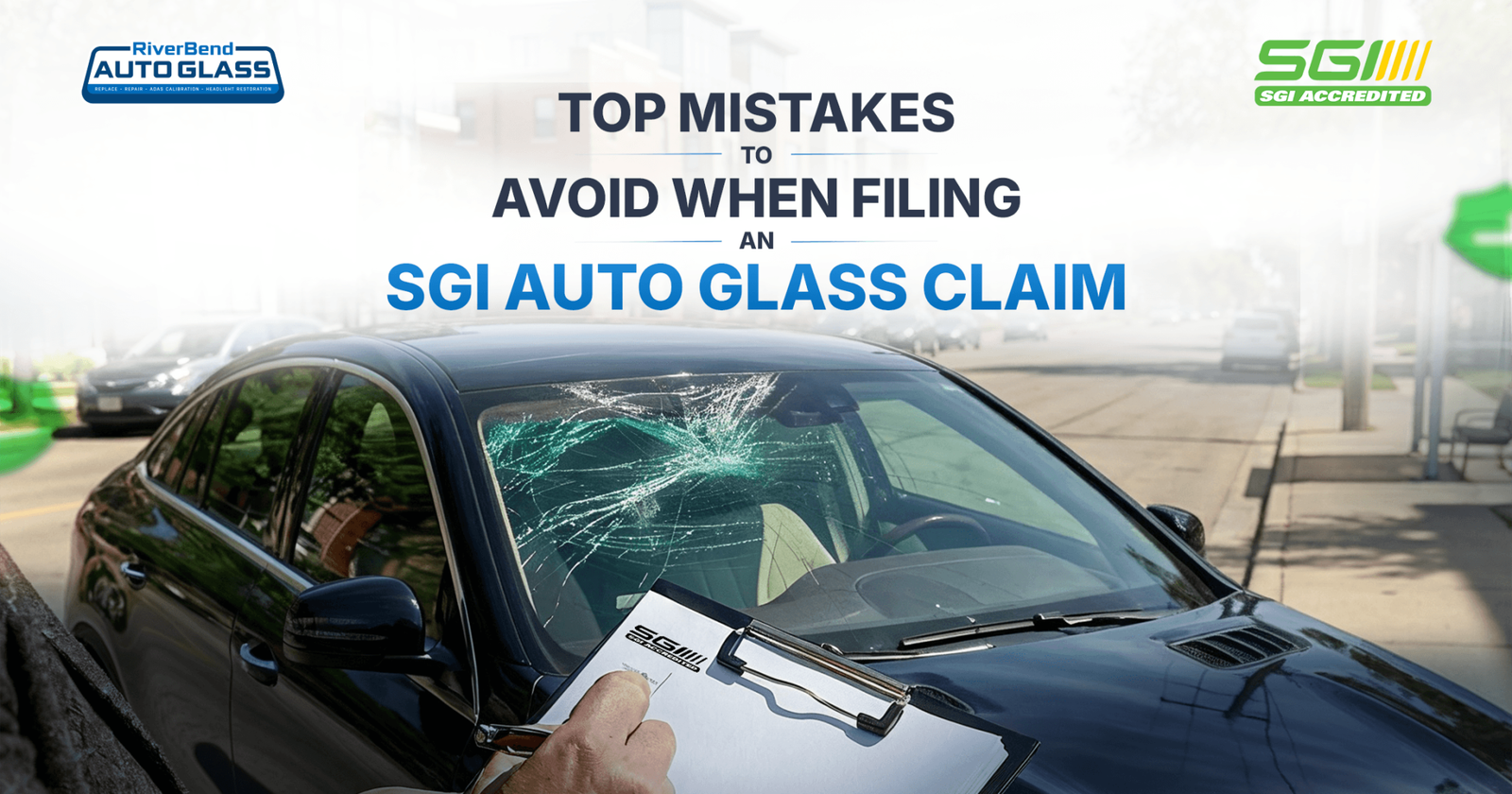
Saskatchewan roads are tough on windshields due to gravel, winter sand, and debris. Glass damage is very common, and since 2018 there have been over 43,000 warnings and 8,300 tickets for cracked windshields.
Filing an SGI auto glass claim seems simple, but many drivers make costly mistakes—delaying repairs, choosing non-accredited shops, misunderstanding deductibles, or skipping the correct process for side/rear glass.
These errors can lead to paying out of pocket, delayed repairs, denied coverage, or even tickets for unsafe driving.
Understanding SGI rules, acting quickly, and using accredited shops ensures faster repairs, lower costs, and proper warranty protection.
In this guide we eill explain Top Mistakes to Avoid When Filing an SGI Auto Glass.
Not Acting Quickly After Windshield Damage
A small windshield chip can quickly turn into a long crack if you wait. Temperature changes, road vibrations, and stress from potholes or doors cause the damage to spread.
Saskatchewan’s extreme weather makes it worse. Cold defrosters, hot summers, and rapid temperature shifts put extra stress on glass, often turning repairable chips into full replacements within days.
Repairing a chip usually costs $50–$150 and takes about 30 minutes, while a full windshield replacement can cost $300–$1,000 or more, plus possible ADAS recalibration.
Act fast—contact an SGI-accredited shop immediately. Early repair saves money, prevents replacement, and keeps your vehicle safe.
Choosing a Non-Approved Auto Glass Shop
Non-approved shops may not offer SGI direct billing, proper warranties, or certified standards. You could pay upfront, face delays, or lose coverage benefits—making “cheap” repairs more expensive long-term.
Importance of SGI-accredited repair centers
SGI-accredited repair shops meet strict standards for training, equipment, and certification, with over 200 facilities across Saskatchewan. They must provide at least a 1-year warranty, and top performers can earn 3-star Elite ratings through SGI monitoring.
Non-accredited shops are not held to these standards and lost access to SGI’s electronic dispatch system after July 1, 2021, meaning less oversight and reduced integration with claims processing.
Risk of denied coverage or out-of-pocket costs
Choosing a non-accredited shop increases your risk of paying out of pocket if something goes wrong. SGI will not cover failed repairs or issues caused by improper work, leaving you responsible for additional costs.
These shops also handle claims manually using a CRN form instead of SGI’s electronic system, which can slow processing and add extra paperwork and delays for you.
Benefits of direct billing shops
Direct billing at SGI-accredited shops is faster and simpler. The shop handles your claim, SGI pays them directly, and you only pay your deductible at pickup.
Non-accredited shops often require you to pay the full bill upfront and wait weeks for reimbursement, adding delay and financial strain.
Accredited shops also have proper tools for modern vehicles, including ADAS recalibration, ensuring safety systems like lane assist and automatic braking work correctly.
Misunderstanding Your SGI Coverage
Many drivers assume SGI covers full glass repairs, but coverage depends on your deductible and Auto Pak options. Without proper understanding, you may still owe significant out-of-pocket costs.
Confusion between repair vs replacement coverage
Many drivers assume all SGI glass damage is the same, but it isn’t.
Small chips are often handled directly through an SGI-accredited shop, and with Road Hazard Glass coverage, repairs may even be fully covered or low cost.
Full windshield replacement follows different rules. Your basic plate insurance covers windshield replacement, but subject to your deductible—currently 700for most light vehicles. If your replacement costs 500 and your deductible is 700,SGI pays nothing.You pay the full500 yourself.
Without Road Hazard Glass coverage on your Auto Pak, your basic plate deductible applies to both repairs and replacements. This catches many drivers off guard.
Deductible rules and when they apply
Your basic plate deductible applies to each claim you file. If you have a claim today and another claim next month, you pay the deductible both times.
The standard deductible for most light vehicles (cars, SUVs, light trucks, vans) is 700.This is set to increase to 950 effective January 1, 2027 .
However, if you have an Auto Pak with the Road Hazard Glass endorsement, you may have a much lower glass-specific deductible. Some policies offer glass deductibles as low as 50 or even 0 for chip repairs.
Your deductible applies to the repair or replacement cost. If your repair costs 1,000 and your deductible is 700, you pay 700 and SGI pays 300. If your repair costs 500 and your deductible is 700, you pay the full $500—the claim never meets your deductible.
Not knowing what your policy actually includes
Many drivers assume basic SGI insurance fully covers glass damage, but it doesn’t. Without Road Hazard Glass coverage, you must pay your standard deductible—usually $700—for windshield repairs or replacement.
The Road Hazard Glass endorsement specifically covers damage from road debris like rocks or objects kicked up while driving, which is the most common cause of windshield damage.
Delaying the Claim Process
Delaying a windshield claim often turns a small, cheap repair into an expensive replacement. A chip can spread quickly due to driving vibrations and Saskatchewan’s extreme temperature changes.
For glass damage, SGI-accredited shops can often handle repairs immediately, but waiting days or weeks increases the risk of worsening cracks. Side and rear glass claims also get delayed because SGI approval can take 2–4 business days.
If the damage spreads, an $80 repair can become a $500+ replacement. Delays may also create claim complications if SGI questions when or how the damage occurred. Acting quickly keeps costs low and repairs simple.
Not Documenting the Damage Properly
Without photos or records of the damage, SGI may delay or question your claim. Always document the crack immediately before repairs to support your claim and avoid issues.
Failing to take photos before repair
Always take photos before any repair or claim submission. Capture wide shots of the windshield plus close-ups showing the chip or crack clearly.
These images help SGI verify damage type, size, and timing. Without them, your claim may face delays or extra questions from adjusters.
A quick 30-second photo step can prevent weeks of issues and support a smooth, faster approval process.
Missing important details for claim validation
Take photos immediately—before repair—and document key details while fresh.
Record the date, time, exact location, road conditions, speed, and how the damage occurred (e.g., rock from another vehicle). Include witnesses if available.
This helps SGI confirm the claim qualifies under Road Hazard Glass coverage, which applies to debris thrown from the road or other vehicles. Without details, validation and approval can be delayed or questioned.
Why documentation helps speed up approval
Complete documentation speeds up SGI claim approval because it lets adjusters verify damage on the first review.
Clear photos and full details reduce back-and-forth calls or emails, which otherwise delay processing by days. Missing information forces additional checks, slowing everything down.
If you’re filing an Auto eClaim, uploading photos directly helps streamline approval and gets your repair scheduled sooner.
Ignoring Repair Instead of Replacement Advice
Ignoring technician advice can cost more later. If a professional recommends full replacement, it’s usually for safety and durability reasons. A failed repair may spread, forcing replacement anyway and increasing total cost and downtime.
Not following technician recommendations
Certified technicians follow strict safety standards to decide whether a windshield can be repaired or must be replaced. Repairs only work for small, shallow damage that doesn’t affect both glass layers or the driver’s line of sight.
Ignoring their recommendation can lead to failed repairs, spreading cracks, and reduced structural safety. In many cases, you’ll end up needing a full replacement anyway, costing more time and money.
Safety risks of ignoring structural damage
A windshield is a key structural safety component, providing up to 45% of roof strength in a rollover and supporting proper airbag deployment.
If structural damage is ignored or improperly repaired, the windshield may not perform as designed in a crash. Even small distortions in the driver’s view can also reduce visibility and increase accident risk, especially in poor lighting or weather conditions.
How SGI relies on professional assessment
SGI relies on certified technicians to assess whether a windshield should be repaired or replaced. Their judgment is based on safety standards and industry guidelines.
If a technician recommends replacement and you insist on a repair, SGI may not cover future issues if that repair fails. Reputable SGI-accredited shops will refuse unsafe repairs and ensure the correct, safe option is chosen from the start.
Not Asking About Deductibles in Advance
Not checking your deductible first can lead to surprise costs. With SGI, you may still owe up to your deductible at pickup, so always confirm coverage before service.
Surprises in out-of-pocket costs
Many drivers assume glass claims cost nothing out of pocket. That assumption leads to expensive surprises.
Your basic plate insurance has a 700 deductible for most vehicles (rising to 950 in 2027). If your windshield replacement costs $500, you pay the full amount. SGI pays nothing because the claim never meets your deductible.
With Auto Pak Road Hazard Glass coverage, your glass deductible may be as low as 50or even 0 for chip repairs. But you must confirm this before filing.
Always ask your shop: “What will I owe today?” A five-minute conversation saves you from a $700 surprise at pickup.
Difference between repair vs replacement
Here is where many drivers get confused. Repair and replacement follow different rules.
Windshield chip repair: If you have Auto Pak coverage with Road Hazard Glass, your chip repair may cost nothing out of pocket. Some policies offer
0 deductibles for chip repairs.Even if you have a deductible, chip repair is typically expensive—$50 to $150. Many drivers choose to pay out of pocket rather than file a claim.
Full windshield replacement: Replacement almost always involves your deductible. Even with Road Hazard Glass, you will likely pay your glass deductible amount. Without Road Hazard Glass, your basic plate deductible of $700 applies.
The difference is significant. A chip repair might cost you 0 to 150 out of pocket. A full replacement could cost you 50 to 700 out of pocket, depending on your coverage.
Always confirming costs before service
Never assume. Always ask. Before any work begins, have a clear conversation with your auto glass shop.
Ask these specific questions:
- “What is my deductible for this repair or replacement?”
- “Will I owe anything out of pocket when I pick up my vehicle?”
- “Do I have Road Hazard Glass coverage on my Auto Pak?”
- “Can you confirm this with SGI before you start the work?”
A reputable SGI-accredited shop will verify your coverage and deductible before they begin any repair or replacement. They will tell you exactly what you will owe. They will not surprise you at pickup.
If the shop cannot tell you your cost upfront, find another shop. This information is readily available through SGI’s systems. Any accredited shop can access it.
Filing Incomplete or Incorrect Information
Submitting incomplete or incorrect claim details can pause your SGI file. Missing information often puts claims on hold, causing delays and requiring resubmission before repairs can proceed.
Missing policy details or vehicle info
SGI’s Auto eClaim system requires specific information to process your claim correctly. Missing even one field can flag your submission for manual review, adding days to your processing time.
Here is what you need before you start:
- Date the incident occurred
- Your driver’s licence
- Your vehicle registration (plate number)
- Your customer number (found on your vehicle registration)
- The postal code listed on your vehicle registration
- Your vehicle’s odometer reading (if available)
- Your SGI CANADA package policy number (if you have Auto Pak coverage)
- Photos of the damage
Missing Auto Pak policy details or using only your plate number can delay verification of glass coverage and deductibles. SGI may default to the basic $700 deductible.
Incorrect vehicle details (VIN, odometer, address, or name mismatch) can also pause your claim while ownership and coverage are verified.
Incorrect claim submission slowing approval
Submitting the wrong claim type can delay SGI approval. Side or rear glass damage must be filed through an Auto eClaim, not directly at a shop like windshield chips. Otherwise, your repair cannot proceed.
Incorrect details such as the date of loss can also slow processing. If information doesn’t match shop records, SGI may need to verify everything, causing delays. Always provide accurate or clearly estimated information.
How small errors create big delays
Small mistakes can trigger manual SGI review, slowing everything down. Each correction step may add 1–3 business days as adjusters contact you and update your file.
A missing policy number, wrong postal code, or incorrect claim detail can easily delay a simple repair by a week or more. What could have been same-day service may turn into a 2–3 week wait.
Not Using Direct Billing Options
Not using direct billing means you may have to pay the full repair cost upfront and wait weeks for SGI reimbursement. Choosing an SGI-accredited shop avoids this—you usually only pay your deductible at pickup.
Paying upfront when it’s not necessary
Many drivers don’t realize they can avoid upfront costs by using SGI-accredited shops with direct billing. The shop bills SGI directly, and you only pay your deductible at pickup.
With non-accredited shops, you usually pay the full amount first and then wait weeks for reimbursement after submitting paperwork. Direct billing keeps your money available and simplifies the entire claim process.
Missing convenience of SGI direct billing shops
SGI-accredited shops are linked to SGI’s systems, allowing instant coverage checks, deductible confirmation, and direct communication with adjusters.
This removes paperwork and follow-ups from your side—the shop handles claims, billing, and coordination while you simply pick up your vehicle.
Non-accredited shops require you to manage everything yourself, including documents, receipts, and SGI communication, leading to more delays and effort.
Faster claim processing benefits
Direct billing makes SGI claims much faster because the shop sends everything directly to SGI. Approvals can happen in minutes, and repairs are scheduled right away.
Without direct billing, you pay upfront and then wait through multiple steps—receipts, paperwork, SGI processing, and reimbursement—which can take weeks. During that time, your money (e.g., $600) is tied up and unavailable for other expenses.
Conclusion
Filing an SGI auto glass claim is simple when done correctly, but small mistakes can cause delays, extra costs, or denied coverage. Acting quickly and choosing the right repair process makes a big difference.
Key mistakes to avoid:
- Waiting too long and letting chips spread into cracks
- Using non-accredited shops without direct billing or proper warranties
- Misunderstanding coverage and deductibles
- Delaying claims while damage worsens in extreme weather
- Not taking photos or documentation before repair
- Ignoring technician advice on repair vs replacement
- Not checking deductibles before service
- Submitting incomplete or incorrect claim details
- Avoiding direct billing and paying upfront unnecessarily
Final advice:
Repair damage quickly—small chips can spread fast in Saskatchewan’s weather. Always choose an SGI-accredited shop for proper standards, warranty protection, and direct billing so you only pay your deductible.
A few careful steps can save time, money, and stress while keeping your vehicle safe on the road.